An annular solar eclipse swept across parts of Antarctica on February 17, briefly dimming daylight and casting a striking shadow across the icy continent. The spectacle, often called a “Ring of Fire,” was captured in dramatic images from space, but it wasn’t visible from India. While many skywatchers here missed out on that rare show, the universe isn’t done yet. A total lunar eclipse is now set to grace Indian skies on March 3.
What Is A Lunar Eclipse And When Can India See It?
A lunar eclipse occurs when Earth moves directly between the Sun and the Moon, causing our planet’s shadow to fall across the lunar surface. Unlike solar eclipses, which are visible only from narrow corridors, lunar eclipses can be seen from anywhere on Earth’s night side. On March 3, viewers in India will catch a relatively short but striking glimpse. In cities such as New Delhi and Noida, the Moon is expected to rise already partially eclipsed at around 6:22 pm IST. The peak will follow quickly at 6:27 pm IST, before the visible phase wraps up by 6:47 pm IST. It’s a tight window, blink and you might miss the best part.
Why India Missed The February Solar Eclipse
Solar eclipses are far more selective. During the February 17 annular eclipse, the Moon was near apogee, its farthest point from Earth, making it appear slightly smaller than the Sun. That’s what creates the glowing ring effect. But because the Moon casts a relatively narrow shadow, only specific regions fall within its path. This time, that slim corridor avoided the Indian subcontinent entirely.
AI Summit 2026: Why Jensen Huang Cancelled India Visit Last Minute? Check What NVIDIA Said
Why This Eclipse Could Turn The Moon Red
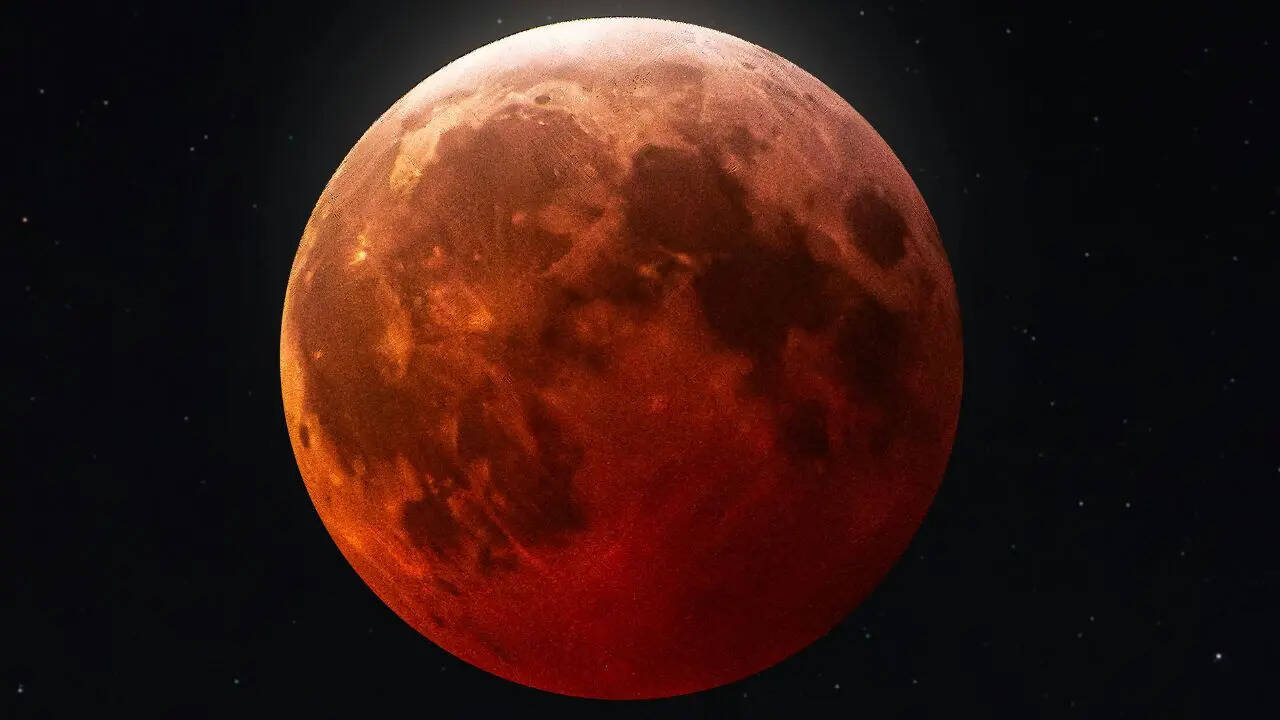
As Earth’s central shadow, known as the umbra, covers the Moon, something magical can happen. Instead of vanishing into darkness, the Moon may glow a deep copper-red. This effect, caused by Rayleigh scattering, filters out shorter blue wavelengths of sunlight while allowing red tones to bend through Earth’s atmosphere and illuminate the lunar surface. That’s why total lunar eclipses are often nicknamed “Blood Moons.” If skies remain clear on March 3, India could witness a dramatic celestial encore, no special equipment required. Just step outside, look up and let the cosmos do the rest.