
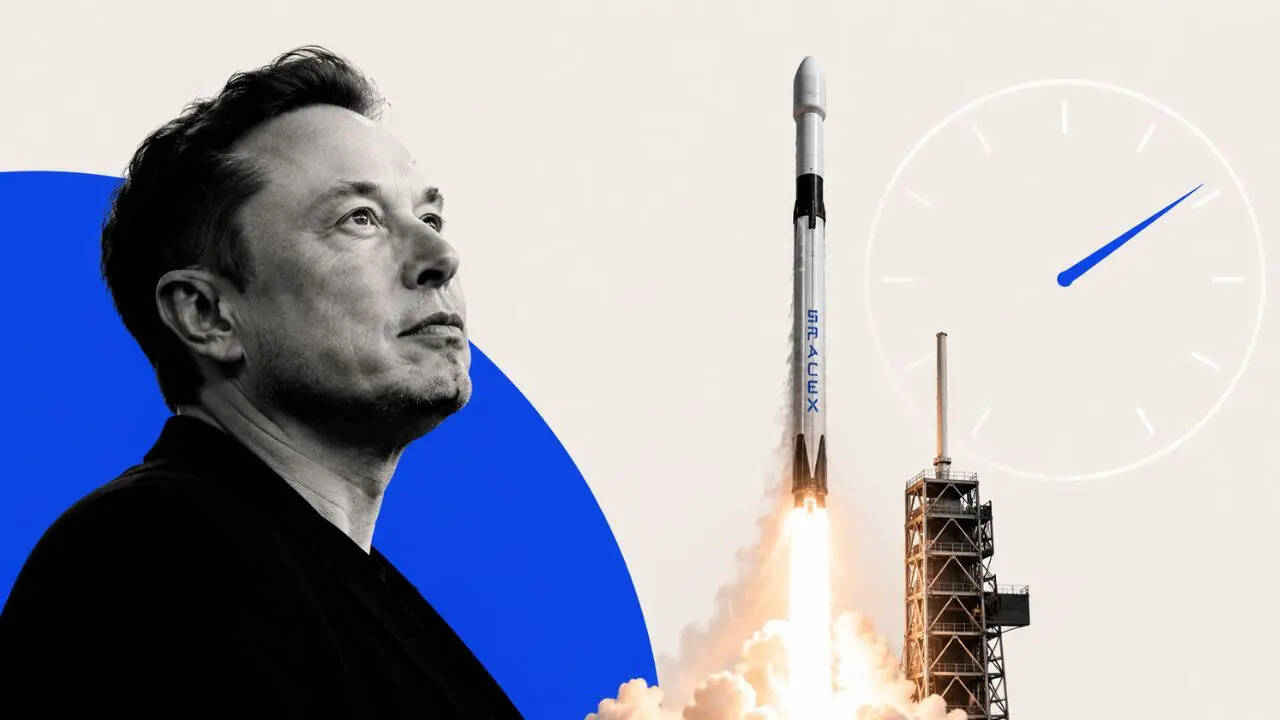
SpaceX is thinking far bigger than regular rocket launches now. Elon Musk’s space company reportedly wants to scale operations to 10,000 launches a year within the next five years, according to comments shared by US Federal Aviation Administration (FAA) Administrator Bryan Bedford. Speaking after an aviation forum, Bedford revealed details from a recent conversation with SpaceX President Gwynne Shotwell. According to Reuters, Shotwell discussed “the SpaceX five-year vision to get to 10,000 launches a year”. For context, SpaceX carried out around 170 launches in 2025 and deployed nearly 2,500 satellites during the year. If the company actually reaches this target, it would completely reshape the commercial space industry.
SpaceX Wants To Flood Orbit With Satellites
The bigger picture behind these launch ambitions seems tied closely to Starlink and Musk’s long-term AI infrastructure plans. In a recent Forbes interview, Musk claimed the company already has roughly 10,000 satellites operating in orbit. He also said SpaceX eventually plans to launch another 10,000 communications satellites every year, though he did not share a specific timeline.
That scale sounds almost absurd until you remember how quickly SpaceX has already transformed the launch market through reusable rockets. A decade ago, frequent rocket reuse still sounded experimental. Now Falcon launches barely feel unusual anymore.
The company has also previously hinted at ambitions to build an enormous satellite network capable of supporting AI-driven systems and global internet coverage.
FAA Says Reliability Still Matters
The FAA, however, does not sound fully convinced yet. Bedford reportedly told Reuters that regulators need to see “a lot more reliability” before launch operations can scale dramatically. He added that SpaceX and regulators recently had “a very frank conversation” about the demands such expansion would create.
One of the major concerns is disruption to regular air traffic. Rocket launches often require temporary flight restrictions, which Bedford described as “very disruptive” for commercial aviation routes.
The FAA is currently reviewing operational data from previous launches to better understand safety risks and airspace management challenges.
Starlink Remains SpaceX’s Biggest Business
Founded by Musk back in 2002, SpaceX has steadily evolved from a risky private rocket startup into the dominant force in commercial spaceflight. Today, Starlink reportedly remains the company’s only consistently profitable business unit.
Recent IPO-related disclosures also showed that SpaceX continues spending heavily on artificial intelligence-linked projects and next-generation infrastructure.
Bedford additionally noted that future US government goals, including plans backed by President Donald Trump to return astronauts to the Moon before 2028, will likely require tighter coordination between regulators and private companies like SpaceX.
previous post
