
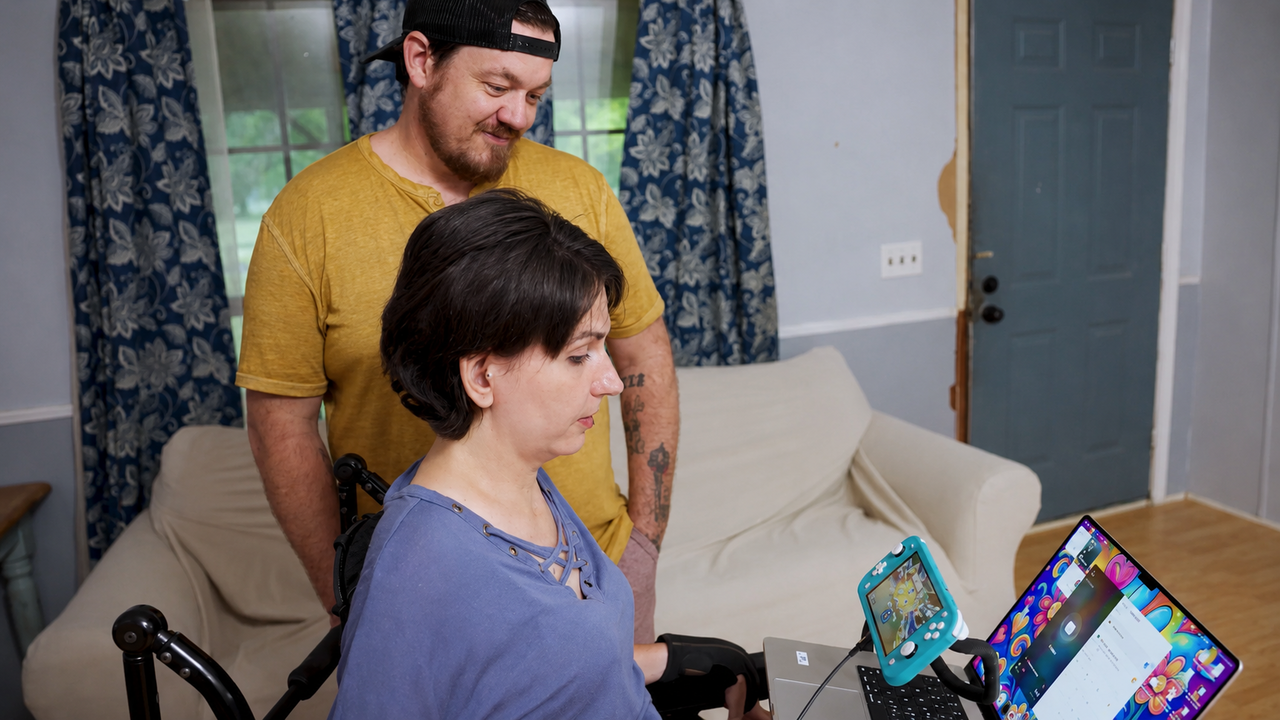
We live in an era which is driven by artificial intelligence. Telepathy powers were part of sci-fi. However, Elon Musk’s Neuralink is working on similar technology to help specially challenged people to communicate their thoughts. The company shared a video showing a paralysed woman, Audrey Crews, using a brain-computer interface (BCI) to control video games with her mind.
Neuralink Shares Audrey’s Story
Neuralink’s video showed how Crews could control a video game with her mind using the BCI technology. In the clip, she can be seen navigating and interacting with games without using her hands or any physical controller.
The company revealed that its goal is to restore abilities that people may lose due to injury, accident or disease. Crew, who is paralysed because of a spinal cord injury, has now become one of the public faces of Neuralink’s mission.
Neuralink Completes Two Surgeries In One Day
Earlier this year, the Musk-owned company revealed that it had completed two implant surgeries in a single day for the first time. It announced that both patients recovered well after the procedures.
Moreover, Crews confirmed on X that she is P9, one of the recipients of the implant. She mentioned that she is the first woman in the world who received the Neuralink brain-computer interface. “I can’t wait for the world to meet me and follow me on my journey,” she wrote in her post.
Crews took to X and shared that she decided to undergo the surgery in the hope of regaining some lost abilities. After the implant, she showcased how she could write her name for the first time since her injury using her thoughts. This procedure reportedly took place at the University of Miami Health Center. Doctors had drilled a small opening in her skull and placed 128 fine threads into the motor cortex of her brain using robotic assistance for precision. The implant itself is believed to be about the size of a small coin.
As of now, the implant technology remains totally experimental and limited to a small number of patients. This incident offers a glimpse into the future where the line between mind and machine could continue to blur.
