
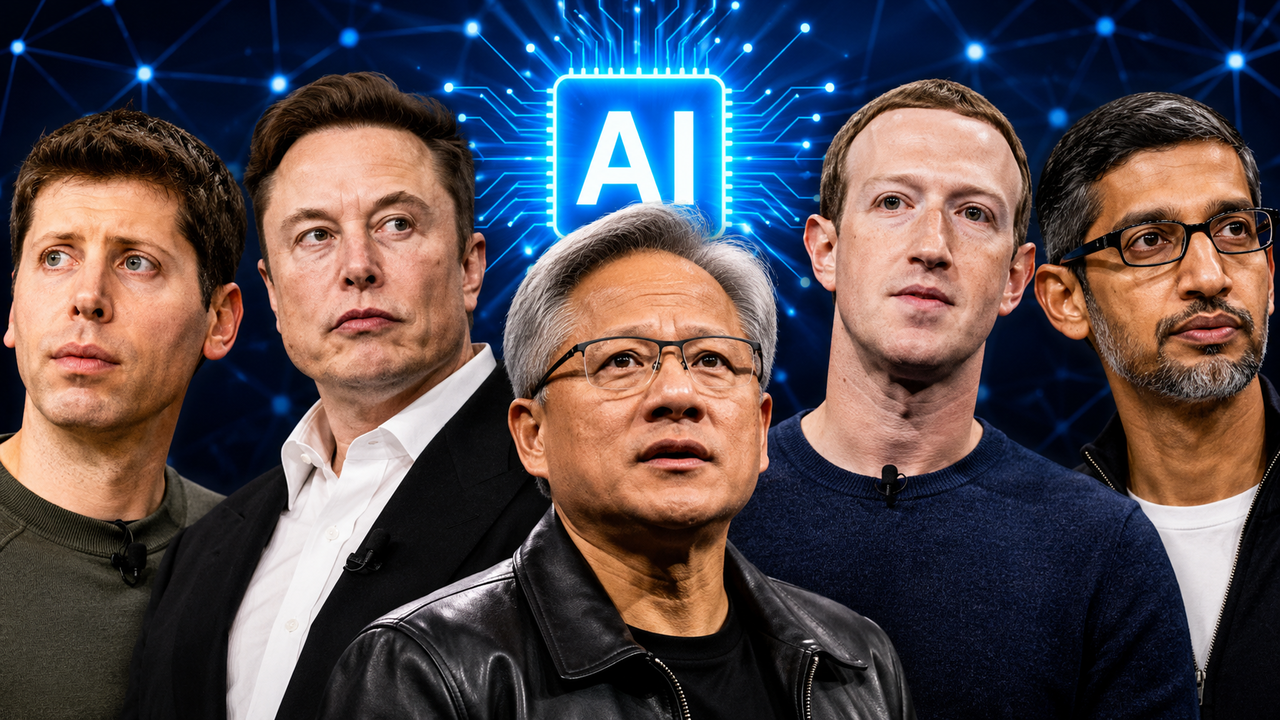
After Microsoft CEO Satya Nadella, Sam Altman and Elon Musk have also supported Nvidia’s push for open-source AI. Many tech leaders and companies have come together to urge the US lawmakers to avoid imposing strict rules on open AI models. In a public letter shared on Friday, the group highlighted that limiting open-source AI too early may slow down innovation, reduce competition, and weaken the United States’ position in the global AI race, particularly against China.
Nvidia Leads Joint Appeal To US Lawmakers
The initiative was started by Nvidia CEO Jensen Huang, whose company published the letter on X. It was signed by more than two dozen companies and organisations, including Microsoft, Meta, IBM, Dell Technologies, Palantir, Hugging Face, Mozilla, Linux Foundation, Mistral AI, Andreessen Horowitz (a16z), Reflection AI and several other AI startups and industry groups.
In the letter, the coalition urged US lawmakers to avoid introducing “premature restrictions on open models that stifle competition or drive innovation overseas.”
This appeal comes at a time when governments around the world debate how advanced AI systems should be regulated and whether open-weight AI models should face stricter controls than proprietary AI systems.
Full List Of Leaders Supporting Open-Source AI
Many industry leaders have either signed the letter through their companies or publicly endorsed the initiative. Here are some of their names.
Jensen Huang, CEO of Nvidia
Satya Nadella, Chairman and CEO of Microsoft
Sam Altman, CEO of OpenAI
Elon Musk, Founder of xAI, SpaceX and X
Sundar Pichai, CEO, Google
Demis Hassabis, CEO, GoogleDeepMind
Mark Zuckerberg, CEO of Meta
Arvind Krishna, Chairman and CEO of IBM
Michael Dell, Founder and CEO of Dell Technologies
Alex Karp, CEO of Palantir Technologies
Besides support from leading technology executives, the appeal has also been signed by a wide range of AI companies, cloud providers, venture capital firms and open-source organisations. The signatories include AI21, AMD, American Innovators Network, AMP, Andreessen Horowitz (a16z), Arcee AI, Arena, Baseten, Black Forest Labs, Block, Box, Cisco, Cloudflare, Cohere, CrowdStrike, Dell Technologies, DoorDash, Emergence Capital, Fireworks AI, Genspark, GitHub, Google, Hugging Face, IBM, Inferact, Interconnects AI, The Linux Foundation, Mariana Minerals, Meta, Microsoft, Mistral, Morph, Mozilla, Nebius, Nous Research, Nvidia, Ollama, OpenAI, OpenClaw, Palantir, Palo Alto Networks, Periodic Labs, Perplexity, Prime Intellect, Reflection, Replit, ServiceNow, Telnyx, Trajectory and Y Combinator.
Although OpenAI is best known for its proprietary AI models, CEO Sam Altman publicly welcomed the campaign.
Altman wrote on X, “I want the US to win in AI both in open source and proprietary models, and i am glad to see this.”
Meanwhile, Elon Musk, who has long supported open AI development, also endorsed the effort, posting, “Overwhelming support for open source.”
Google CEO Sundar Pichai also shared the X post of Demis Hassabis, CEO of Google DeepMind, who wrote, “A strong and secure open ecosystem is important for the world to benefit from AI. We’ve always supported and contributed heavily to open source and science from Jax to Transformers to AlphaFold to Gemma open models which have now been downloaded 300M+ times. And the standards framework we’ve proposed supports responsible deployment of both open and proprietary models.”
The group also pushed back against the idea that closed AI systems are automatically safer.
The letter states, “Relying solely on closed models is not inherently safe: they can be breached, misused, or fail in ways that outsiders cannot detect.”
It added, “Open weight models, on the other hand, allow a broad community of researchers and developers to examine their behavior, identify vulnerabilities, develop safeguards, and improve them over time.”
The appeal comes as US lawmakers consider tougher AI regulations following growing concerns over cybersecurity and the misuse of advanced AI models. Some lawmakers have proposed measures such as mandatory AI “kill switches,” while the Trump administration is also considering sanctions on Chinese open-source AI developers over allegations involving the misuse of US technology.
While acknowledging concerns about intellectual property theft, the coalition argued that such issues should be addressed through targeted legal and commercial measures rather than broad restrictions on open-source AI.
