
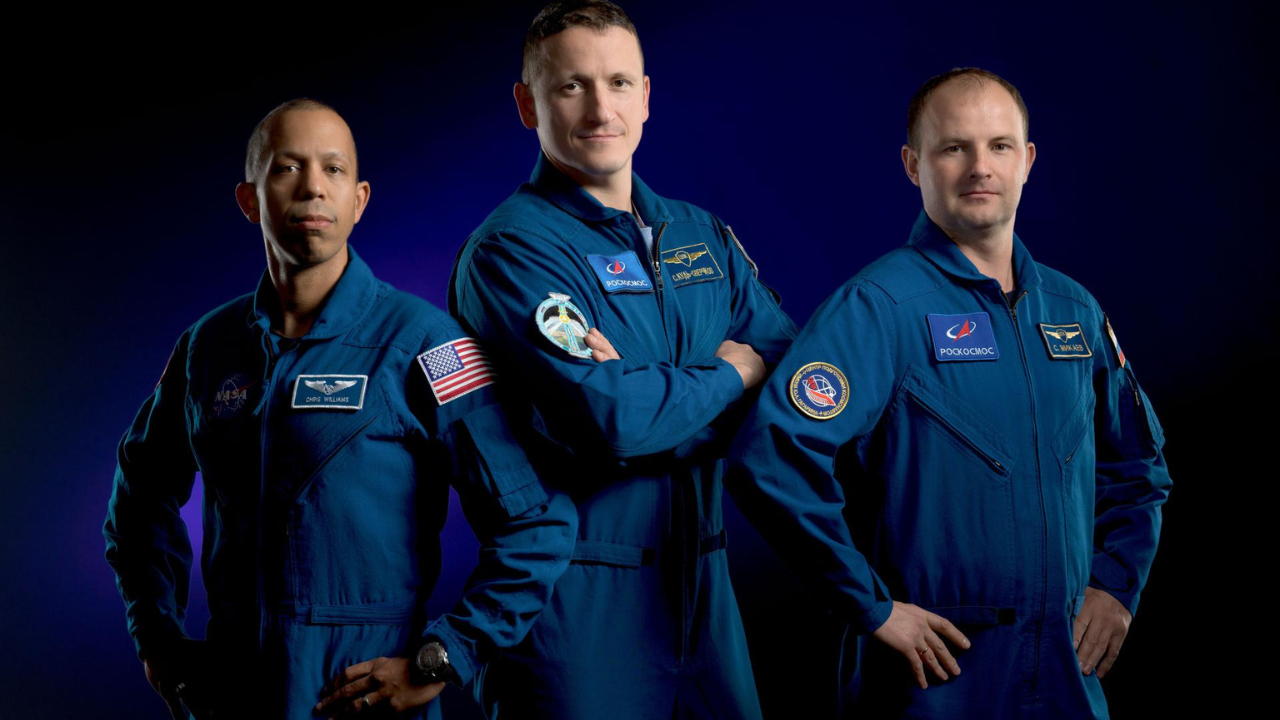
After a long journey of eight months in space, NASA astronaut Chris Williams finally made it to Earth with his crewmates on Sunday. His return marked the end of a mission that was about conducting research that may improve healthcare, technology and future human missions beyond Earth.
Safe Landing In Kazakhstan
According to NASA, Williams returned along with Roscosmos cosmonauts Sergey Kud-Sverchkov and Sergei Mikaev aboard the Soyuz MS-28 spacecraft. The capsule landed safely under parachutes at 5:27AM CDT (3: 57PM IST) in the steppes southeast of Dzhezkazgan, Kazakhstan.
After the routine medical checks post landing, the astronauts were scheduled to travel by helicopter to Karaganda, Kazakhstan. Williams will then fly to NASA’s Johnson Space Center in Houston, where he will continue post-mission recovery and debriefing, revealed NASA.
More Than Eight Months in Orbit
The crew spent 241 days living and working aboard the ISS after launching on November 27, 2025. While aboard the space station, Williams took part in several scientific studies and technology demonstrations designed to support both life on Earth and future exploration. His work contributed to research for developing new cancer treatments and improving manufacturing techniques for materials used in high-performance computers and advanced electronic devices.
Williams also carried out two spacewalks during the mission. These were conducted to prepare the space station for future power system upgrades and to replace a faulty joint on the Canadarm2 robotic arm, an important piece of equipment used for station maintenance.
NASA said the work completed during the mission supports efforts to make future space missions safer and more efficient while expanding scientific knowledge. The American space agency also noted that research conducted aboard the ISS helps scientists better understand the challenges of long-term human spaceflight while creating new commercial opportunities in low Earth orbit.
Although the mission officially ended with a parachute landing in Kazakhstan, its impact is expected to continue for years. From advancing medical research to testing technologies needed for future lunar and Martian missions, the crew’s work adds another chapter to humanity’s growing presence in space.
