
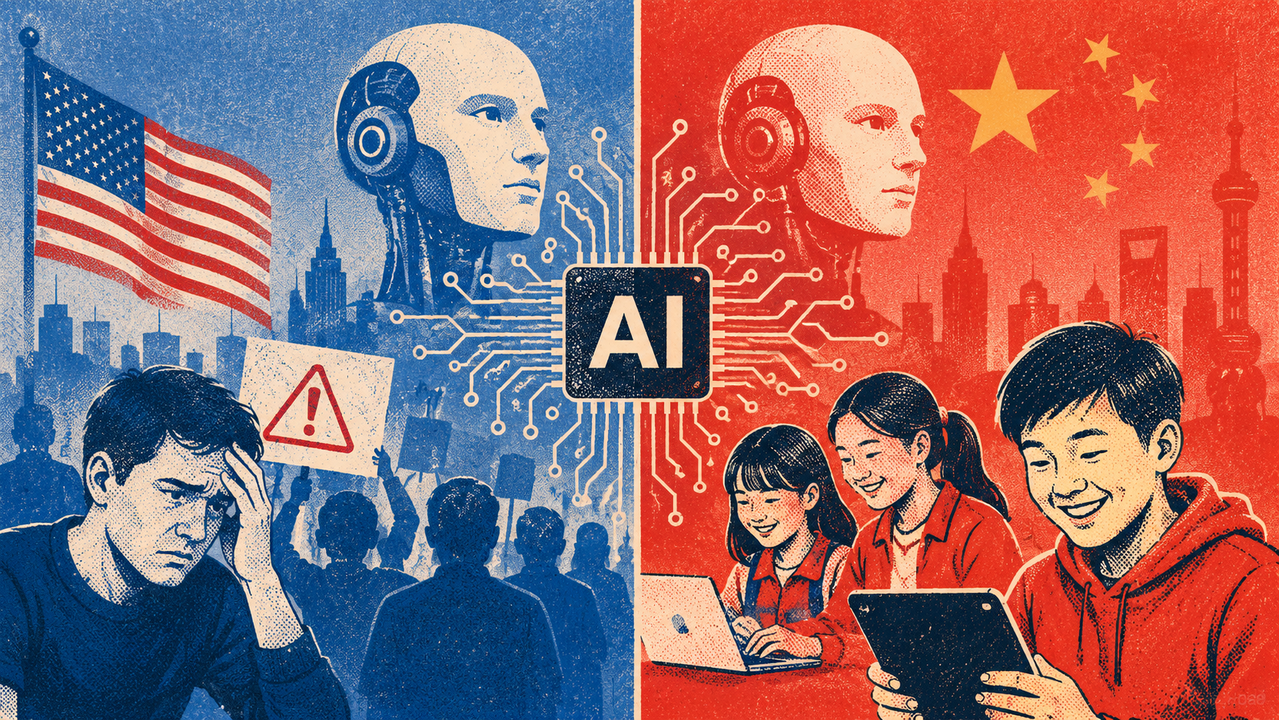
Artificial intelligence has become a key part of our lives. Some may happily automate their workflow while others can debate about the AI taking away jobs. However, nobody will be left out from its growing impact on our lives. A new report from Bloomberg shows that Americans are rapidly calling for stronger AI regulations while China is becoming enthusiastic for it.
This wide difference was also allegedly visible when former Google CEO Eric Schmidt was booed at the University of Arizona’s commencement in May after he spoke about the “huge benefits of AI.” On the other hand, Chinese state media suggested that students are admiring the growing use of AI in classrooms.
China More Excited About AI
According to data from Stanford University’s AI Index, 84 per cent of people surveyed in China said they were excited about AI, compared with just 38 per cent in the US. Trust in the technology also shows a major gap. Another separate survey from the Edelman Trust Barometer shared first with Axios found that 72 per cent of Chinese respondents trusted AI, compared with 32 per cent of Americans.
The difference does not mean Chinese consumers are unaware of AI’s risks. Concerns over scams, deepfakes and the impact of AI on children are widespread.
However, many Chinese people see technology as a tool that can create more opportunities. Smartphones, online shopping, mobile payments and food-delivery platforms have transformed everyday life and helped connect rural communities with services and jobs.
Fear Of Job Loss
According to Bloomberg, the US has a different technological memory. Many Americans associate the internet era with problems such as misinformation, social media’s impact on teenagers and growing concerns about the power of large technology companies. AI is now adding another layer of anxiety, particularly around employment.
Anthropic CEO Dario Amodei has warned that AI could eliminate a large share of entry-level white-collar jobs, while Elon Musk has predicted a future where “there will come a point where no job is needed.”
China is not immune to concerns about AI replacing workers. Carnegie Endowment’s Matt Sheehan found that jobs climbed from the sixth to the second biggest concern among Chinese AI policy experts between early 2024 and early 2026. Still, AI adoption in China remains strong. Chinese policymakers and technology leaders often frame AI as a tool to increase productivity and improve everyday life.
The clear cut divide between the countries makes one thing clear: People cannot escape the impact of AI.
