
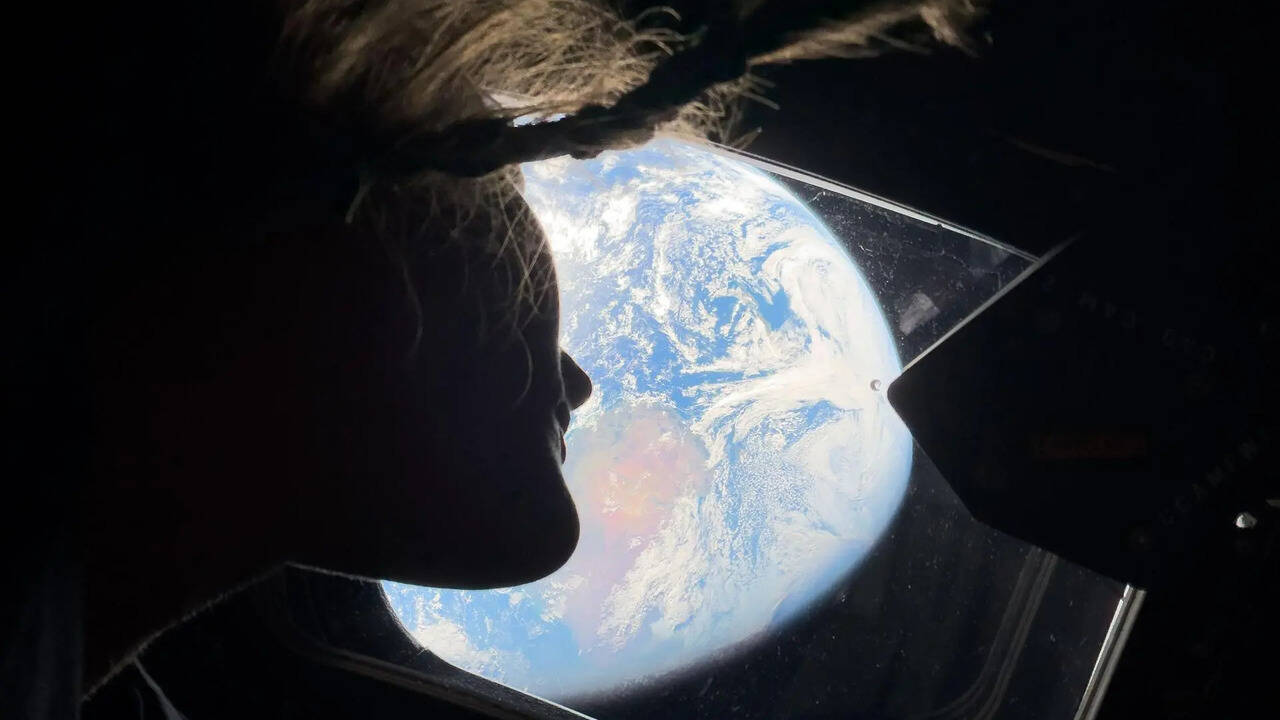
NASA’s Artemis II mission is on its final stage of its journey, with the most crucial and dangerous phase of the mission still yet to be finished. After successfully completing a lunar flyby, the Orion spacecraft is now heading back towards Earth, preparing for a high-speed re-entry on April 10. The space agency has confirmed that the crew has crossed the halfway point between the Earth and the Moon. This update marks a significant milestone in the mission, which will pave the way for future lunar missions.
According to the space agency, the Artemis II crew is expected to splash down in the Pacific Ocean off the coast of San Diego at around 8:07 PM EDT on April 10. NASA confirmed that recovery teams have already been positioned to retrieve the crew. NASA tweeted, “They’re halfway home. The Artemis II astronauts have hit the ‘halfway’ mark between the Moon and the Earth. They will splash down in the Pacific Ocean around 8:07 pm ET on Friday, April 10 (0007 UTC on Saturday, April 11), off the coast of San Diego.”
NASA Artemis II Gears Up For The Most Dangerous Phase
Spalishing down remains one of the most dangerous phases of the Artemis II programme. As the Orion spacecraft gears up to return to Earth, it will be travelling at speeds more than 30 times the speed of sound. This can lead to descent compression of atmospheric gases near the capsule, producing extreme heat. Temperatures around the Orion can rise up to 5,000 degrees Fahrenheit, which can melt most metals.
Related News |
NASA Artemis II Shares New Moon Images That Turn Sci-Fi Into Reality
Artemis II Crew Reflected On The Risks Ahead
Addressing the media on April 9, 2026, Victor Glover highlighted that reentering the Earth’s surface has been on his mind since the astronauts were assigned to the mission. He said that while the excitement to travel around the Moon has been undeniable, the real priority remained reaching back to Earth safely. Returning to the Earth’s atmosphere remains one of the most critical phases of any space mission. Scientists are closely monitoring the most serious concern related to the spacecraft’s heat shield. To recall, during the Artemis I Mission in 2022, the capsule was found with unexpected surface damage, which included cracks and small pits. Fortunately, the spacecraft was fine; the findings asserted a comprehensive review of the thermal protection system.
