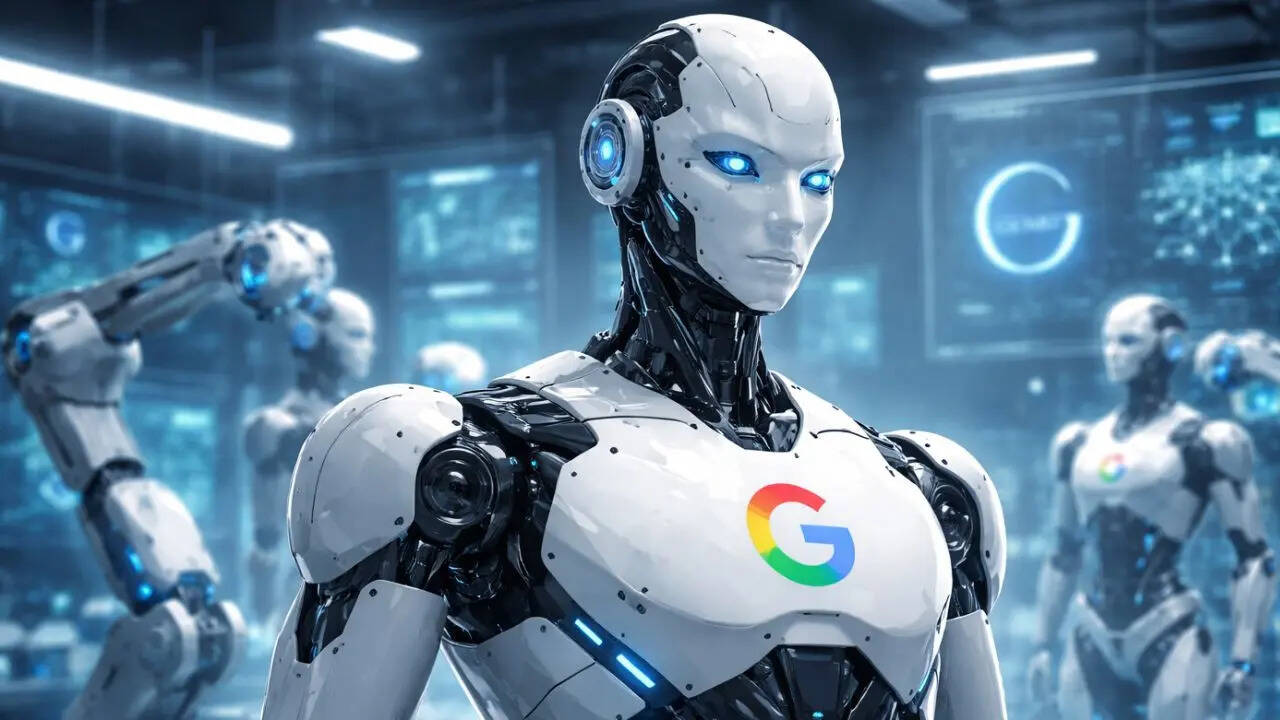
Google has been moving at a very fast pace in the AI race, and the next stop seems like humanoid robots backed by the Gemini AI model. In a recent developer, Boston Dynamics and Google DeepMind have announced a new AI partnership that focuses on turning humanoid robots smarter and productive instead of being showpieces that can dance.
The collaboration will be using Boston Dynamics’ Atlas humanoid, clubbed with Google DeepMind’s Gemini Robotics AI models. Now, the goal of the two giants is to make Atlas more adaptable, smart, and capable of handling real industrial work.
As said by Boston Dynamics, the partnership will be focusing on visual-language-action models, which could be dubbed the most complex domain where most of the robots struggle. The models created by Google DeepMind are meant to help Atlas understand spoken or written instructions, along with reading complex surroundings, and then decide the coarse of action. In practicality, this will let the robots adapt to unexpected situations.
How To Get Google Gemini, Perplexity, ChatGPT Go For Free In India? Grab It Before The Deal Is Gone
As for the recent other developments, Boston Dynamics has introduced the fully electric version of Atlas at the Consumer Electronics Show (CES) 2026 and also confirmed that production is kicking off immediately. In addition, the company’s deployment plans for 2026 are also in place, and the initial fleets will be shipped to Google DeepMind and Hyundai Motor Group. Here, the robots will train for industrial roles, starting with automotive manufacturing.
Google DeepMind’s Senior Director of Robotics, Carolina Parada, said, ‘We developed our Gemini Robotics models to bring AI into the physical world. We are excited to begin working with the Boston Dynamics team to explore what’s possible with their new Atlas robot as we develop new models to expand the impact of robotics, and to scale robots safely and efficiently.’
Similarly, the Director of Robot Behaviour for Atlas at Boston Dynamics said, ‘We are building the world’s most capable humanoid, and we knew we needed a partner that could help us establish new kinds of visual-language-action models for these complex robots. Nobody in the world is better suited than DeepMind to build reliable, scalable models that can be deployed safely and efficiently across a wide variety of tasks and industries.’