
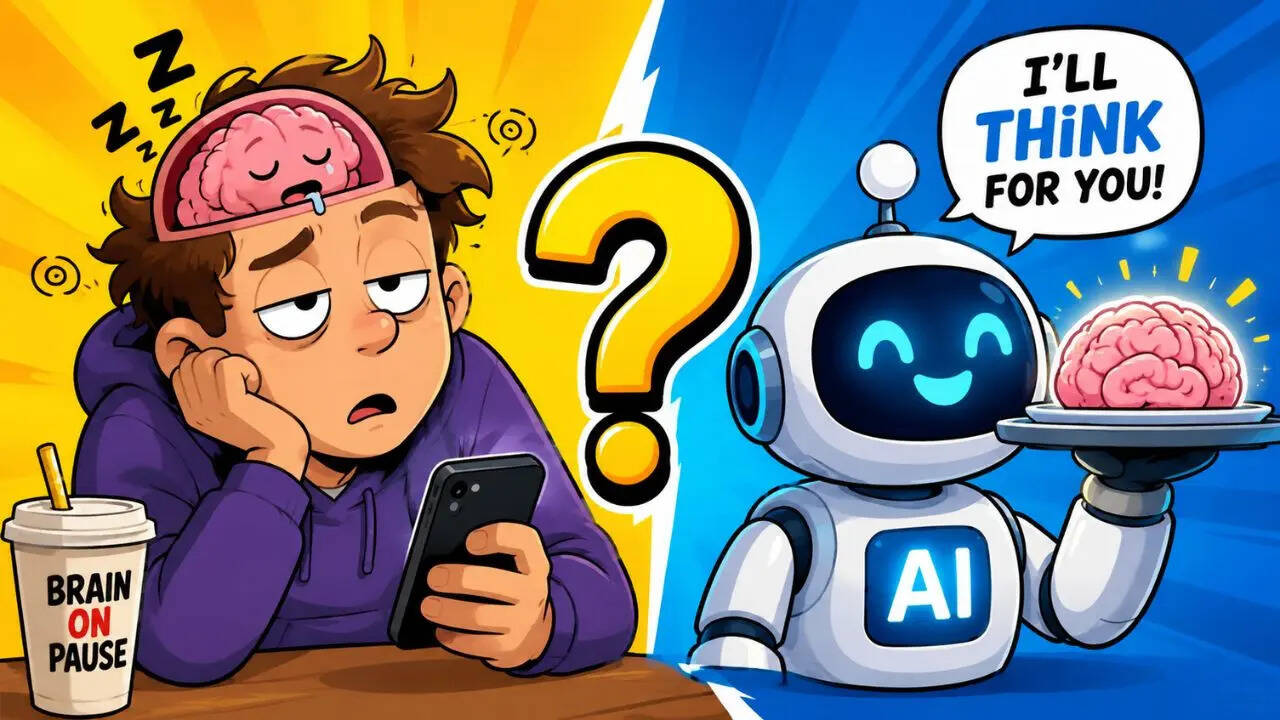
Artificial intelligence may be making life easier, but some experts are beginning to worry about what it could quietly be doing to human thinking in the long run. The Royal Observatory Greenwich, one of the UK’s oldest scientific institutions, has now warned that overdependence on AI-generated answers could gradually weaken critical thinking, curiosity, and problem-solving skills. The comments come at a time when AI tools are quickly becoming part of everyday life, from search engines and classrooms to workplaces and coding platforms.
“Instant Answers” Could Change How Humans Think
Speaking to the BBC, Paddy Rodgers, director of the Royal Museums Greenwich group, said the growing habit of relying on AI for quick answers risks damaging the deeper habits that drive learning and innovation.
“A reliance solely on instant answers risks losing the habits of questioning and evaluation that underpin knowledge, expertise and innovation,” Rodgers said.
According to him, many of humanity’s biggest discoveries happened not because people instantly found answers, but because they explored ideas slowly, asked difficult questions and sometimes even made mistakes along the way.
The Observatory is currently undergoing a transformation project called “First Light,” which aims to reconnect people with centuries of scientific curiosity and discovery.
Why Human Curiosity Still Matters
Rodgers pointed out that early astronomers often collected huge amounts of information without knowing how future generations might use it. In some cases, data recorded centuries ago later became useful in helping scientists verify entirely new theories. Interestingly, he noted that humans often pursue “unnecessary” questions and observations that machines might ignore altogether. That unpredictability, according to him, is part of what drives scientific progress.
The debate is not entirely anti-AI, however. Some educators have similarly argued that AI tools can support learning if used responsibly. A lecturer from Oxford Brookes University told the BBC last year that AI could help students focus on more meaningful parts of education, provided they do not “outsource their thinking.”
Why AI Is Making Tech Leaders Depressed
Cognitive Outsourcing
Researchers are increasingly studying something called “cognitive outsourcing,” where people slowly stop exercising memory, analysis, or reasoning because technology handles those tasks for them.
Dr Anuschka Schmitt from the London School of Economics told the BBC that modern conversational AI systems have “dramatically reduced the barrier” for people to avoid cognitive effort in work, learning and even leisure activities.
And as AI-generated summaries, AI Overviews and chatbot-style answers replace traditional search methods online, concerns around overreliance are only growing stronger.
