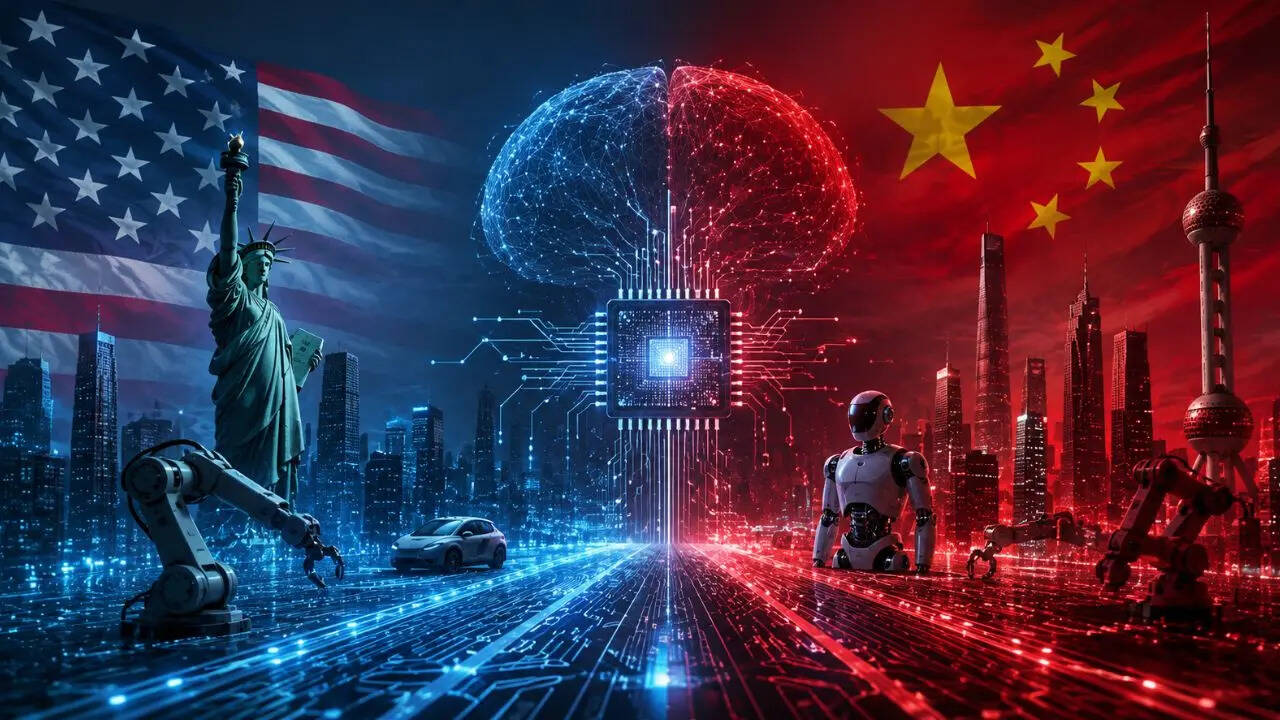
A United States congressional advisory body has stated recently that China is commercialising and monetising data as a strategic national asset to fuel its AI and technology goals, which could potentially give it an advantage over the United States in the AI race. The US-China Economic and Security Review Commission wrote in a report released on Tuesday, ‘Beijing is marshalling data to drive productivity … (and) improve its intelligence collection and military capabilities.’
The national data administration of China did not immediately respond to a faxed request for comment outside of working hours. While the key AI firms of the United States have largely exhausted the open internet for language model training, China is systematically collecting domestic ‘enterprise, operational, and physical-world data that cannot be scraped’, crucial for the training of AI tools designed for business use, autonomous vehicles and humanoid robots, a major symbol of Beijing’s top-down innovation push.
The report also said that China’s advanced manufacturing and industrial robotics ecosystems offer a vast pool of high-quality data for use in embodied AI applications, which are like AI systems operating in the physical world, like robots, giving it a potential advantage over the US in developing robotics software for commercial and military usage.
The commissioner’s Vice Chair, Mike Kuiken, said, ‘Over the last half decade, China has been able to consolidate data, find ways to label it and refine it, and hoover up new data and make sure it’s quickly made available to entities. It has the benefit of advancing their innovation ecosystem, and it has the benefit of enhancing the control of the (Chinese Communist) Party.’
China has also gripped its regulatory oversight of cross-border data regulations a little more than what we saw in the past. On this, Kuiken further said, ‘We recommend that U.S. Congress think about a national data strategy and how the U.S. government could treat data as an economic asset as our number one recommendation.’