
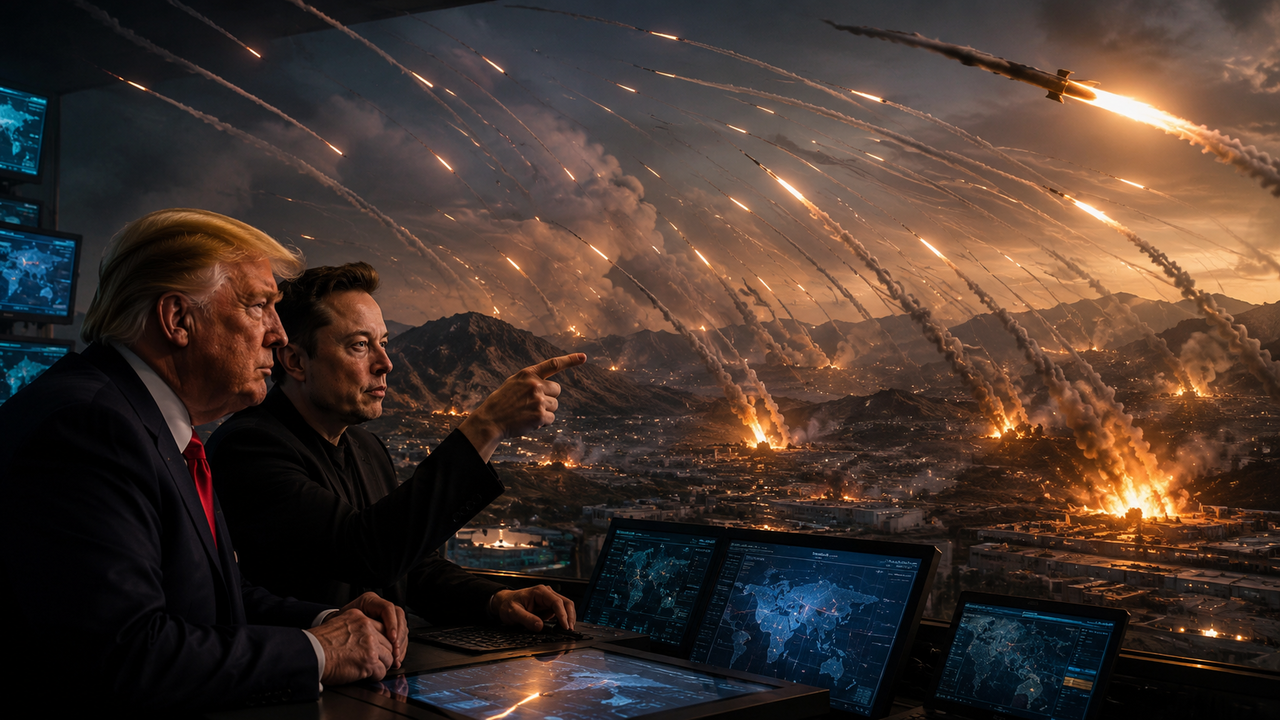
Elon Musk’s AI chatbot Grok is at the centre of a big controversy after a senior US defence official revealed that the xAI’s chat assistant was used to support military operations that involved firing more than 2,000 missiles at 2,000 targets within a span of just 96 hours.
According to a report by The Independent, the disclosure was made in a sworn court filing by Cameron Stanley, the Pentagon’s Chief Digital and Artificial Intelligence Officer.
Stanley said Grok is one of the few AI systems capable of supporting sensitive national security operations and the AI chatbot played a role in mission-critical military activities.
How Musk’s Grok AI Used To Fire 2,000 Missiles At Iran
As per the report, Grok was used during a military campaign known as Operation Epic Fury. While the AI system did not directly decide where missiles should be fired, it helped process and analyse large amounts of intelligence data that military officials used during operations.
As per The Independent, Musk’s chatbot is part of a select group of AI models approved for use in highly classified government environments.
The Pentagon also said that restricting xAI’s operations could negatively impact US national security efforts.
To those unaware, Trump administration defended xAI in a lawsuit filed by the Human rights group — NAACP. The organisation has accused the company of violating environmental regulations through the operation of gas-powered turbines at its data centres.
The government, however, argued that data centres powering AI systems such as Grok are strategically important and could play a key role during national emergencies or military conflicts.
The report has once again sparked debate over the growing use of AI in warfare. Critics have raised concerns about the role AI may have played in military strikes that reportedly caused civilian casualties, including the deaths of children.
Several US lawmakers are now pushing for stricter rules on military AI.
“Senator Kirsten Gillibrand has proposed legislation that would ensure human commanders remain responsible for life-and-death decisions and prevent AI from being used in areas such as nuclear weapons and autonomous combat systems,” The Independent reported.
