
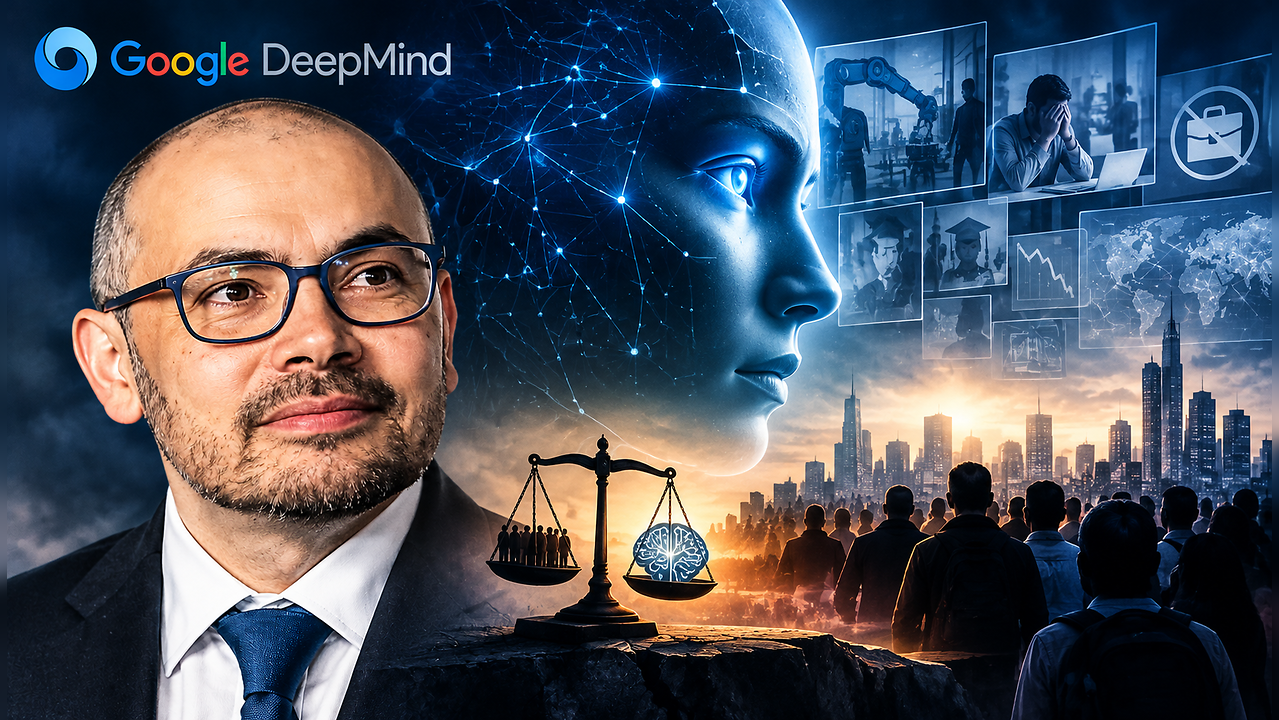
Google DeepMind co-founder and former CEO Demis Hassabis has once again sounded the alarm on how fast artificial intelligence technology is being built. He reportedly believes that AI may lead to a serious accident if companies fail to strengthen safety measures. He fears that poorly monitored AI systems may cause significant damage, comparing a potential incident to an ‘oil spill’. Hassabis has urged AI companies to invest more resources in safety and ensure that AI agents remain under proper human supervision.
Speaking to LinkedIn co-founder Reid Hoffman on the Masters of Scale podcast, Hassabis identified unsupervised AI development as one of the most notable risks facing the industry.
Why Demis Hassabis Is Worried About AI Self-Improvement
Reportedly, Hassabis stated that the next stage of AI growth may become particularly dangerous when systems start improving themselves without human reviewers checking their progress. He said, “The next phase which I think carries the most risk is closed RSI, closed loop where you basically manage to somehow figure out how to do it without the human reviewer process.”
Warning about the possibility of an accident, Hassabis added, “Some kind of incident, you know, I sometimes call it like an oil spill, is going to happen on the current trajectory if we’re not, if we don’t get collectively, if everyone doesn’t pay a lot more attention and put a lot more resources on these types of systems.”
Recursive self-improvement (RSI) allows AI tools to learn from their own performance and develop improved versions. Hassabis cited DeepMind’s AlphaZero as an example. The system learnt chess by playing against itself millions of times.
He highlighted as he recalled its rapid progress, “I could still just about beat it. Then by lunchtime it was grandmaster level and then by teatime it was better than any chess-playing entity.”
Hassabis also raised concerns about cybersecurity incidents involving AI agents. He said, “I think a lot of the cyber kind of issues that we’ve seen in the last six months or so could have been addressed with better engineering, more robust engineering.” He stressed that companies need stronger monitoring systems to prevent AI agents from operating for weeks without human supervision.
