
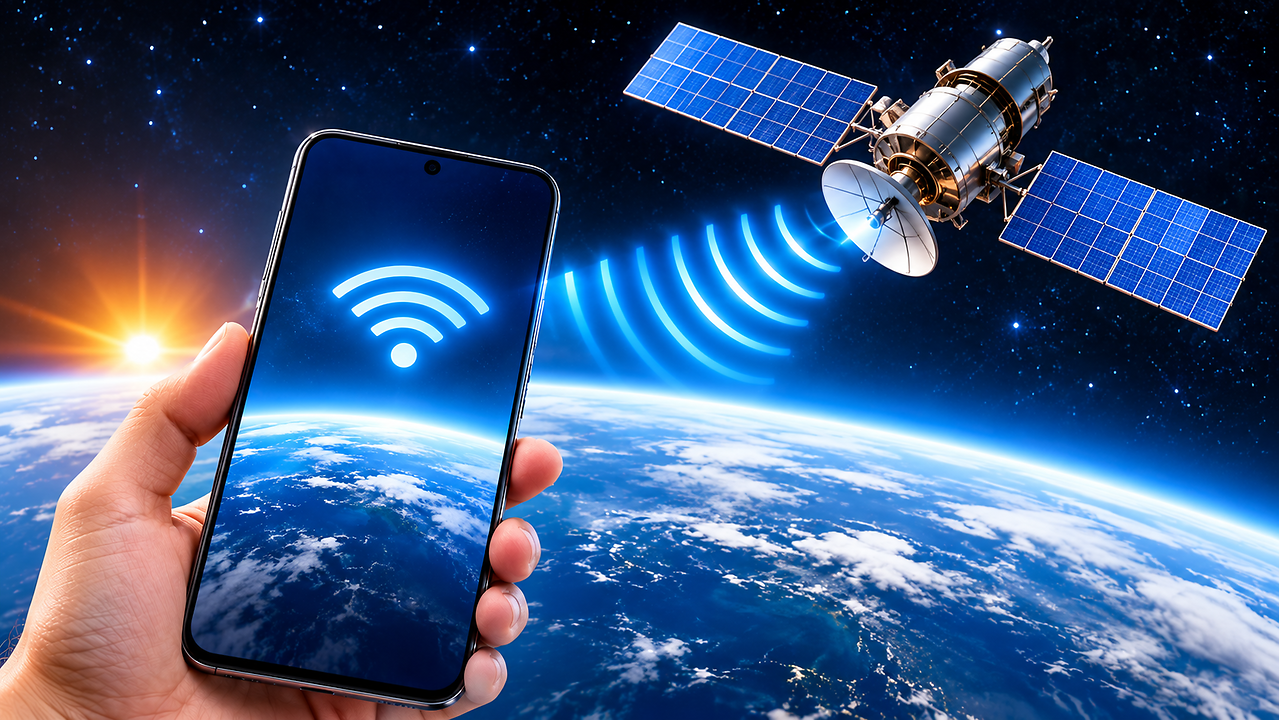
If you are struggling with mobile network connectivity in areas where signals are weak or mobile towers are not easily available, things may change in the coming years. Your smartphone may soon be able to connect directly to satellites without depending entirely on traditional mobile towers.
The Telecom Regulatory Authority of India (TRAI) has recommended a new framework to expand satellite communication services in the country. The recommendations include allowing Direct-to-Device (D2D) satellite connectivity, which can allow compatible smartphones to connect directly to satellites.
However, this does not mean that satellite connectivity will become available on all smartphones immediately. The government will first have to accept the recommendations and finalise the rules.
What is Direct-to-Device (D2D) satellite connectivity?
As the name suggests, Direct-to-Device (D2D) technology allows a smartphone or another compatible device to communicate directly with satellites.
At present, most mobile phones depend on nearby mobile towers to make calls, send messages and access mobile networks. But satellite connectivity will provide another way to connect, particularly in areas where traditional mobile network coverage is limited.
This means that in the future, compatible smartphones will get satellite connectivity without depending only on mobile towers.
TRAI recommends two types of satellite connectivity
In its recommendations, TRAI has proposed allowing two types of Direct-to-Device services in India.
1. MSS-based D2D connectivity
MSS stands for Mobile Satellite Service. Under this system, smartphones can connect directly to satellites using specific satellite frequency bands, including L-band and S-band.
TRAI has recommended allowing MSS-based D2D services in India. It has also suggested that smartphone manufacturers should be encouraged to include the necessary hardware modules to support these satellite frequency bands in future smartphones sold in the country.
This is important because not every existing smartphone has the hardware required to support satellite connectivity.
2. IMT-based D2D connectivity
The second option is IMT-based D2D connectivity. IMT stands for International Mobile Telecommunications.
Under this system, satellite networks would be able to use certain mobile spectrum bands already associated with traditional mobile networks to provide direct satellite connectivity to compatible devices.
TRAI has recommended allowing this service in India on a non-interference and non-protection basis. This means satellite services must not cause harmful interference to existing mobile network operations.
The regulator has also recommended allowing the use of 600MHz, 700MHz, 800MHz, 900MHz, 1800MHz and 2100MHz bands for this purpose.
Will all smartphones get satellite connectivity?
No, not immediately. Smartphones will need to support the required satellite frequency bands and hardware.
TRAI has recommended that the government encourage smartphone manufacturers to include support for applicable MSS bands in future devices.
The availability of these services will also depend on the government’s final policy, network infrastructure and partnerships between satellite network providers and telecom operators.
What are TRAI’s other recommendations?
Apart from direct satellite connectivity, TRAI has proposed introducing a new authorisation called Satellite Communication Network Provider Authorisation. Under this framework, authorised companies will be able to provide satellite communication network infrastructure as a service to eligible telecom service providers.
However, these satellite network providers will not be allowed to offer telecom services directly to consumers. The regulator has recommended that this authorisation should have a maximum duration of 20 years with an option for renewal.
