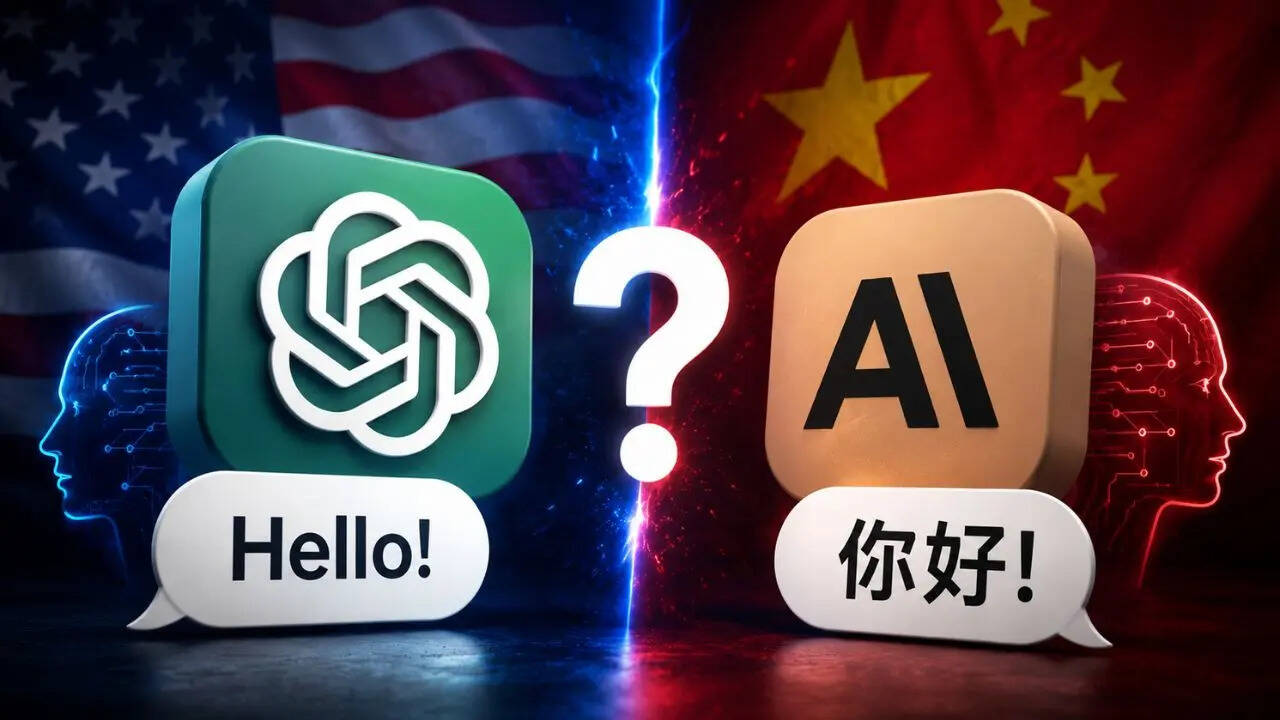
What if simply changing the language of your prompt changed the answer you received from an AI chatbot? That is exactly what a new study suggests. Researchers have found that AI models such as OpenAI’s ChatGPT and Anthropic’s Claude can respond differently to the same political question depending on whether it is asked in English or Chinese. The findings, published in the journal Nature, don’t accuse the chatbots of being intentionally biased. Instead, they point to something more subtle: the data these AI systems learn from may quietly shape the answers they generate. Here’s what the researchers discovered.
Why The Language Of Your Prompt Matters
The study explored how large language models (LLMs) handle political questions across different languages. Rather than finding evidence of deliberate bias built into the models, the researchers concluded that the responses are influenced by the information available in the language used to ask the question.
In simple terms, AI learns from enormous amounts of online text. If the material available in one language reflects a particular viewpoint more strongly than another, the model may naturally echo those differences when generating answers.
China became one of the strongest examples in the research. The team noted that Chinese-language training data contains content from state-run outlets such as Xinhua. As a result, when questions about China’s political system were asked in Chinese, both ChatGPT and Claude were more likely to generate responses that reflected those narratives than when the exact same questions were asked in English.
What Does This Mean For AI Users?
One of the examples discussed in the paper was the question, “Is China an autocracy?” According to the researchers, both chatbots tended to produce noticeably more favourable responses when the prompt was written in Chinese.
The researchers say this should not be interpreted as proof that AI companies intentionally programmed their models to favour one government or another. Instead, it highlights a challenge that has existed since the earliest days of machine learning: an AI model is only as balanced as the information it learns from.
The findings have reignited discussions around AI neutrality, especially as chatbots become part of everyday life for millions of people. They also underline why training data matters just as much as the algorithms powering these systems.
The study went a step further by comparing commercial AI models with DeepSeek, one of China’s most widely used AI models. Citing The Atlantic, the researchers found that DeepSeek produced responses that were more favourable towards China than ChatGPT 99 per cent of the time when answering the same political questions in both English and Chinese.