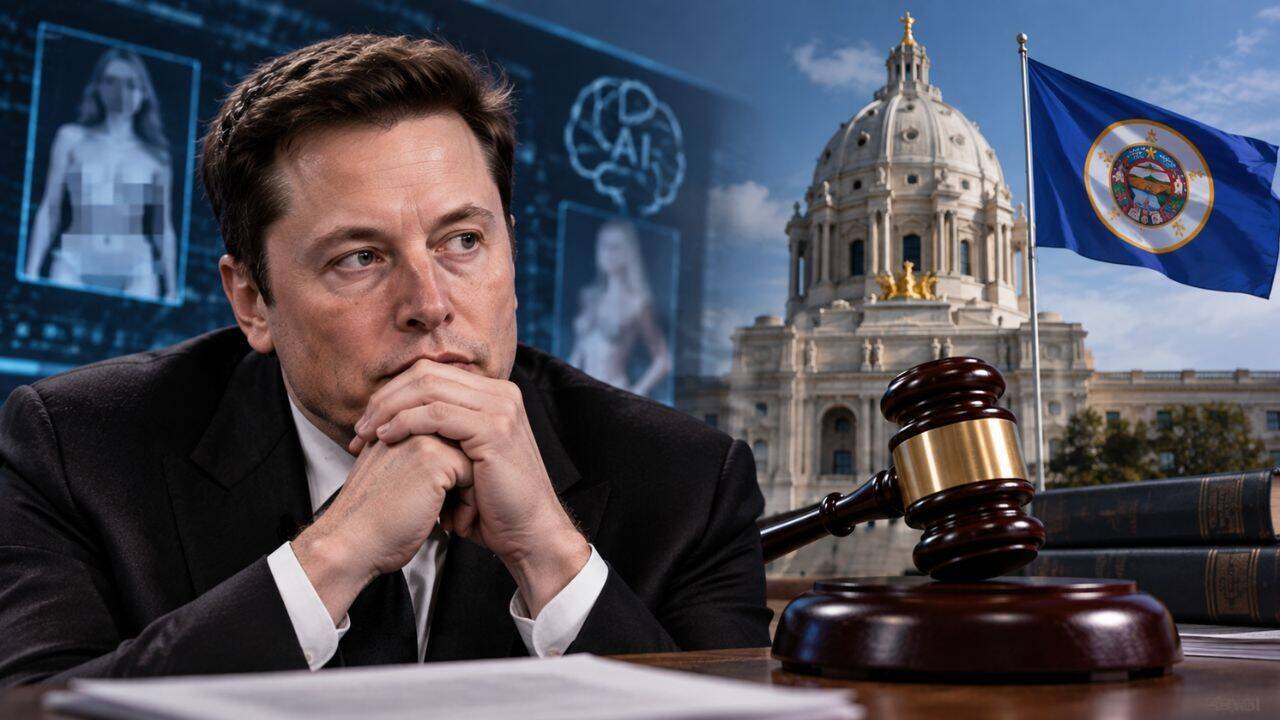
Minnesota’s first-in-the-nation ban on AI-generated fake nude images will remain in effect as a constitutional challenge by Elon Musk’s xAI proceeds, after a federal judge on Friday declined to block the law at an early stage of the case. Elon Musk’s xAI argues the measure restricts free speech protected by the US Constitution by the United States Constitution, while Minnesota says the law is narrowly tailored to curb the spread of nonconsensual sexual imagery created with artificial intelligence.
United States District Judge Donovan Frank rejected xAI’s request for a preliminary injunction against the law, which took effect on August 1 and prohibits website operators, software developers and others from letting users to nudify images of identifiable people using AI technology. Frank’s order said xAI failed to show it would suffer harm while it pursues a lawsuit alleging the new law violates the Constitution’s First Amendment by restricting protected expressive activity.
Frank wrote, ‘The constitutional issues raised by the parties are complex, particularly when considered in the context of this new technology and the risks that it poses to the public. These issues deserve, and will receive, full consideration.’
According to a report published by Reuters, the firm said in a court filing on Friday that it will appeal the judge’s order to the St. Louis-based 8th United States Circuit Court of Appeals. Minnesota Attorney General Keith Ellison, a Democrat, called the state’s law ‘overwhelmingly bipartisan and nearly unanimously approved’ by state lawmakers.
Ellison said in a statement, ‘These nudification apps have been used to generate child sexual abuse materials and harass people in the vilest ways imaginable. That repulsive behavior is not welcome in Minnesota.’ The judge also turned down Musk’s bid in July 2026 to stop the law from taking effect but agreed to fast-track his review of the measure.