
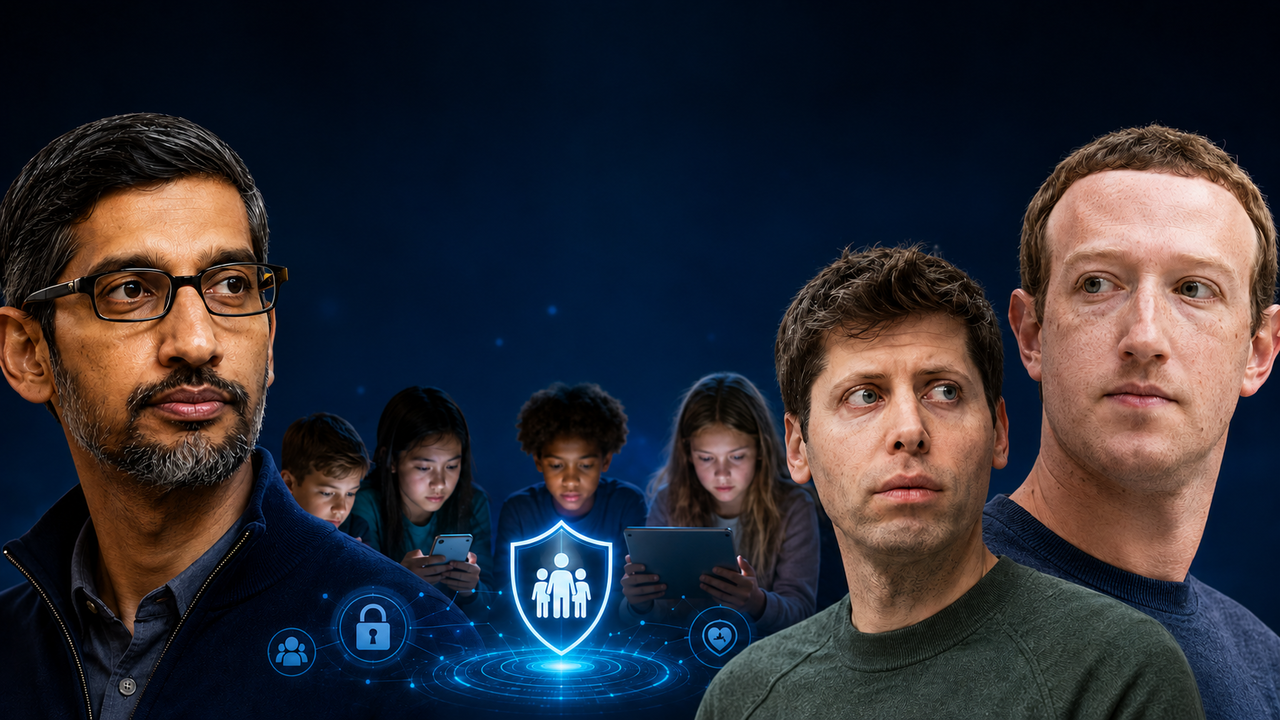
Canada has become the latest country to join the global fight against Big Tech over concerns around social media and artificial intelligence (AI), especially for children under the age of 16. The Canadian government has introduced a new Digital Safety Bill that would ban children under 16 from using social media platforms unless companies meet certain safety standards.
The proposed law would also bring AI chatbots, including services like ChatGPT and Gemini under stricter regulation. According to the Canadian government, social media platforms and AI chatbots are designed to keep users engaged and can have a negative impact on children’s mental health.
If approved, the legislation will create a digital regulator that will set safety rules for social media platforms and AI chatbot services. Companies that fail to follow the rules could face fines of up to three per cent of their global revenue or C$10 million, whichever is higher.
Canada’s move comes months after Australia became the first country in the world to pass a law restricting social media access for children under 16. Canada is not the only country looking at stricter online safety rules.
France is considering stronger controls for young social media users, while Denmark and Poland are discussing similar measures. Greece has already announced plans to restrict social media access for children under 15 starting in 2027.
Countries such as the United Kingdom, Spain and Malaysia are also exploring new rules to make the internet safer for children.
What makes Canada’s proposal different is its focus on both social media platforms and AI chatbots.
Governments around the world are increasingly worried about how children use AI tools and whether existing rules are enough to protect them from harmful or misleading content. For companies such as Meta, Google, OpenAI, Anthropic, Microsoft, Snap and X, the pressure from regulators continues to grow.
Governments are no longer focusing only on privacy and competition issues. Child safety, mental health and online wellbeing are now becoming key areas of concern.
Where Does India Stand?
India has not announced a nationwide social media ban for children like Australia or the proposed rules in Canada. With one of the world’s largest populations of young internet users, India should also consider similar measures to reduce children’s exposure to harmful online content.
There are growing calls in the country to introduce similar ruls for kids, however, the real challenge is whether such restrictions can be effectively enforced across the country.
According to experts, India should introduce a unique digital ID backed by a proper KYC process.
“I think India should have a unique digital ID backed by a proper KYC process. Then, it should be made mandatory to use this digital ID while signing up for any service or application to verify a user’s age,” Faisal Kawoosa, Founder of Techarc, had told Times Now Tech.
