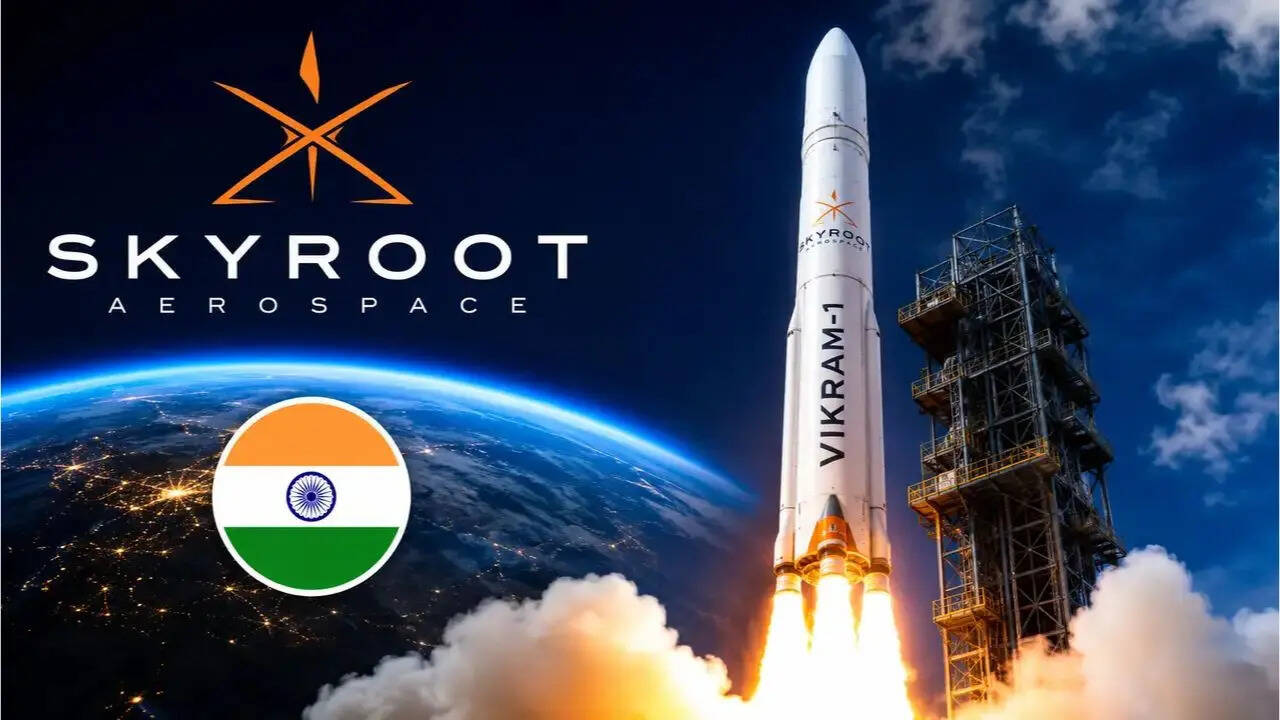
India’s private space industry is on the verge of a landmark moment. Skyroot Aerospace, the Hyderabad-based spacetech unicorn, is preparing to launch Vikram-1, India’s first privately developed orbital rocket, from the Satish Dhawan Space Centre (SDSC-SHAR) in Sriharikota. According to a public notice issued by the space centre’s Space Theme Park, liftoff is currently targeted for 11:30 AM IST on July 18, although the schedule will still depend on weather conditions and final technical checks. If everything goes as planned, the mission could mark a turning point for India’s commercial space ambitions. Here’s everything you need to know about Vikram-1.
Why Vikram-1 Matters
Vikram-1 has the potential to become the first privately built Indian launch vehicle to successfully place satellites into orbit, a feat no private company in the country has achieved so far.
The mission, named “Aagaman,” is the first in a planned series of three developmental flights aimed at validating the rocket before it enters regular commercial service. During this mission, Vikram-1 is expected to carry multiple customer payloads into a low-Earth orbit roughly 450 kilometres above the Earth’s surface.
Unlike Skyroot’s Vikram-S mission in 2022, which was a suborbital flight, Vikram-1 is designed to reach orbital velocity. That means it will give satellites enough speed to stay in orbit instead of briefly touching space before descending back to Earth.
A New Chapter For India’s Private Space Industry
Founded in 2018 by former ISRO engineers Pawan Kumar Chandana and Naga Bharath Daka, the homegrown spacetech champion has quickly emerged as one of the biggest names in India’s growing private space ecosystem. The company’s progress reflects the opportunities created after the government opened the space sector to private players in 2020.
Vikram-1 itself is a four-stage launch vehicle. The first three stages rely on solid propellant, while the upper stage uses a restartable liquid engine that can place satellites into their intended orbit with greater precision.
The rocket has been designed primarily for launching small satellites, a market that is expanding rapidly as governments, research organisations and private companies continue putting more spacecraft into orbit.
Although Skyroot had initially announced a launch window between July 12 and August 4, the latest notice from SDSC-SHAR now points to July 18 as the target date. If the mission succeeds, it won’t just be a milestone for Skyroot. It will be another significant step in India’s journey towards becoming a major player in the global commercial launch market.