
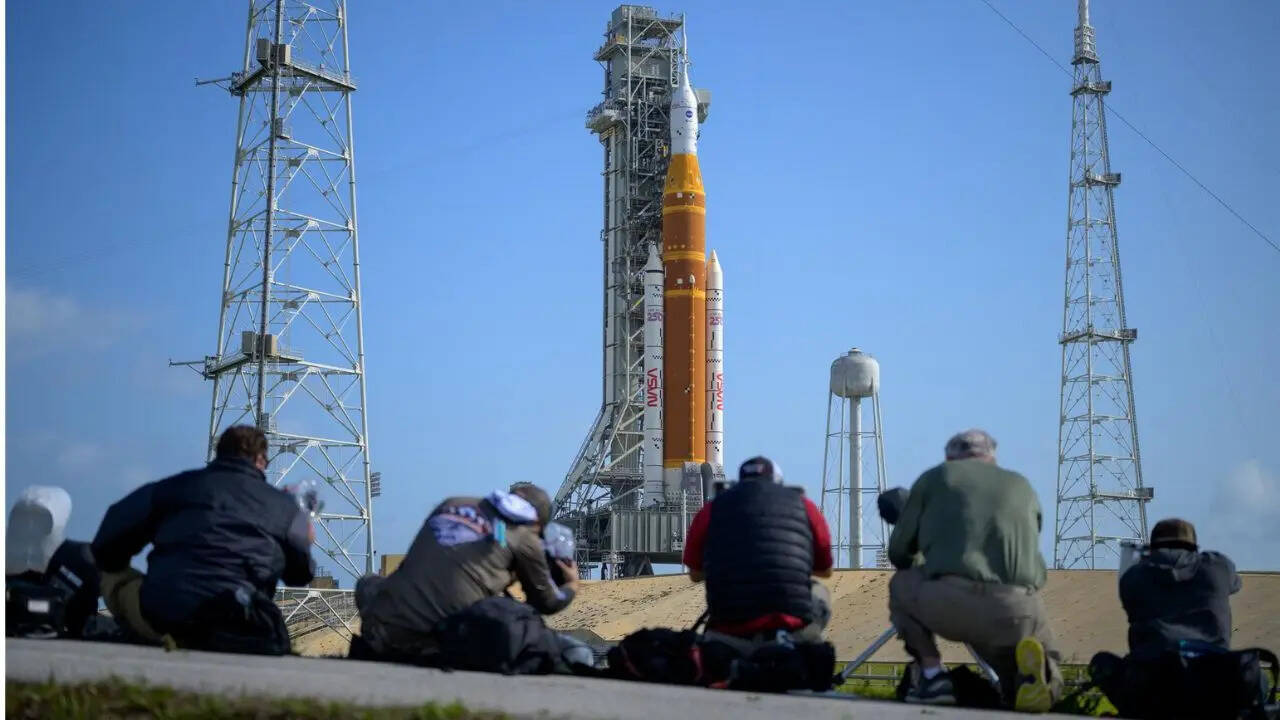
Mark your calendars: NASA has set April 1 as the launch date for Artemis II, with the window opening at 6:24 p.m. ET. The two-hour window gives the agency some flexibility, but the target is clear, Kennedy Space Center in Cape Canaveral, Florida is where history will be made.
What Exactly Is Artemis II?
At its core, Artemis II is a 10-day crewed mission that will send four astronauts on a loop around the moon. No landing, this time around, the goal is to prove the hardware, the crew and the systems work as intended before NASA commits to putting boots on the lunar surface.
Think of it as the dress rehearsal before the main event.
Who Are the Crewmembers?
Reid Wiseman takes the commander’s seat, with Victor Glover as pilot. Christina Koch and Canada’s Jeremy Hansen both fly as mission specialists. For the Canadian Space Agency, Hansen’s seat on this flight is a significant moment.
How Far Will They Actually Go?
Apollo 13 holds a record most people have never heard of, the farthest any human has ever traveled from Earth, at 248,655 miles. That number has stood since 1970. The Artemis II crew is expected to beat it.
Flying roughly 6,000 miles above the lunar surface, the astronauts will catch a glimpse of parts of the moon’s far side that no Apollo crew ever saw from their trajectory. It is a long way from home by any measure.
How To Watch the Launch?
Live coverage will begin on NASA’s YouTube page at around 7:45 a.m. on April 1, when teams load propellant into the SLS rocket. Full detailed coverage on NASA+ will begin at around 12:45 p.m.
What Comes After Artemis II?
The mission is one chapter in a much longer story. Here is how the road ahead currently looks:
Artemis III (2027): The Orion capsule will meet and dock with a commercial lunar lander in Earth orbit. Two companies are developing those landers, SpaceX, led by Elon Musk, and Blue Origin, founded by Jeff Bezos. NASA will also use this mission to put new spacesuits through their paces. The extravehicular activity suits, being developed by Axiom Space, are designed specifically for work on the lunar surface.
Artemis IV (2028): This is the one people have been waiting for, an actual moon landing, the first crewed lunar touchdown since Apollo 17 in 1972.
NASA Administrator Jared Isaacman has outlined an ambitious long-term vision. Once the program hits its stride, the agency hopes to achieve crewed lunar landings at least twice a year, potentially more.
Why It Matters
Artemis II is not just a test flight. It is the moment NASA demonstrates, in front of the entire world, that returning humans to the moon is no longer a plan on paper. For the first time in over half a century, the moon is back within reach.
